What Kind of Ways Are There to Teach Art Styles
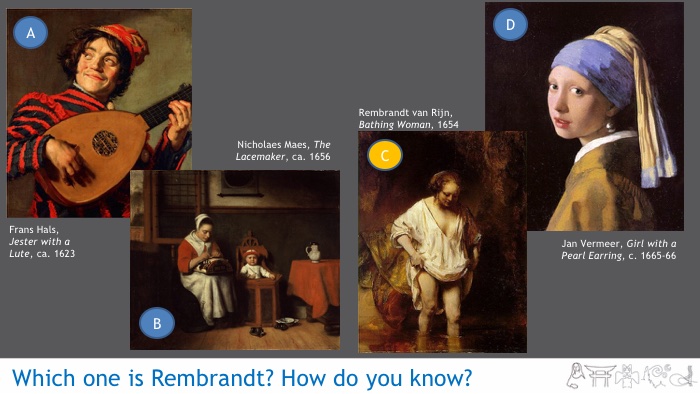
How can you tell a Rembrandt from a Vermeer? They both are from the same location and same time period, but they each have their own way of painting, and they are each categorized in art history as Northern Baroque, Rembrandt's thick awarding of paint and raw emotion is hands distinguishable from Vermeer's well-baked genre paintings.
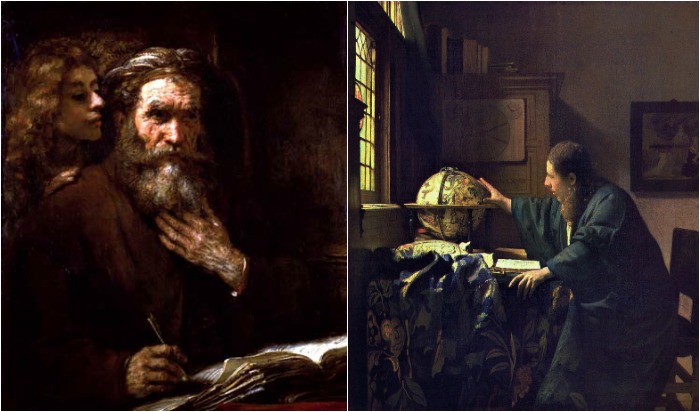
Putting some of their works adjacent, they take many similarities but also many key differences. I beloved putting artworks side past side and asking students to find the differences. Teaching students how to recognize the parts of an artwork that brand information technology unique and the choices the artist had made helps them connect with the art and trains them to see the world effectually them in dissimilar ways.
In my opinion, one of the most important strategies when learning from works of art is to focus on the style of the art. Style is an artist'southward way of making art. Information technology's how we tell one artist or one fine art movement from another. It'due south the style they apply the paint, the compositional choices they brand, the colors they use, etc.
I always begin an art history course with a discussion on style, considering it is something we come to over again and once again and again throughout the semester.
I take a free lesson that goes along with this post.
The fashion I teach fashion is through practice. I did this activity with my 7th graders last semester during a lesson on Post-Impression, and they ate it upward! They loved it!
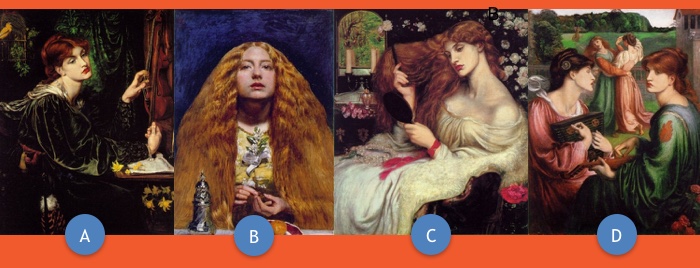
Here's what I do. Commencement, I put up 4 artworks on the screen – 3 are done by the same creative person and 1 is done by a different artist. I selection artworks that are very similar with noticeable merely not overt differences. For the get-go time, I ask students to write in their notes which i is not past the same artist, which one doesn't fit. Then, they accept to describe the why. What makes the quaternary 1 different? This starts to train their eye to notice detail in fine art.
After they have the chance to reflect individual, we accept a class vote–who thought it was A, or B, etc. Sometimes, one is a articulate win, but other times there is some discussion. Whether they go it right or incorrect, they are notwithstanding spending time with art in valuable ways.
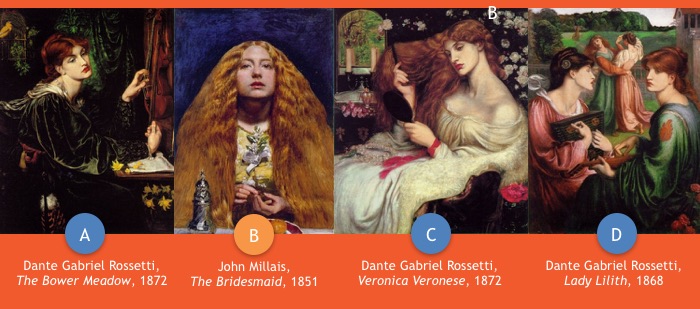
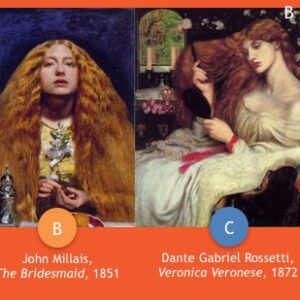
My first set I usually use is a grouping of pre-Raphaelite paintings. Three are done past Dante Gabriel Rossetti and the fourth is by John Millais. In this word, students notice the backgrounds, the textiles, the fashion they're dressed, the facial features of the women, the patterns, the way the compositions are cropped, and the emotions.
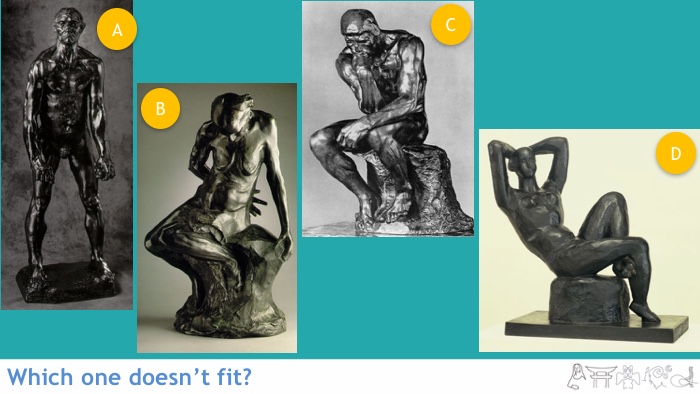
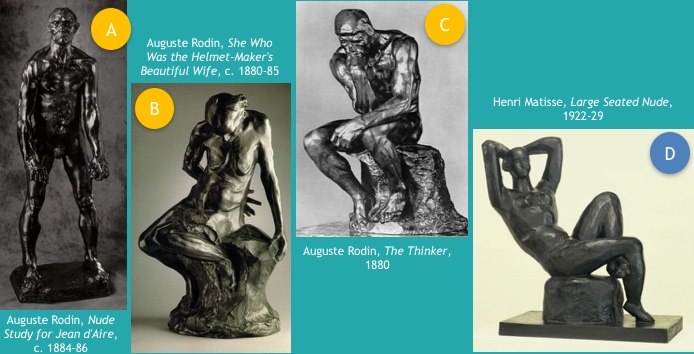
The next set up is a petty harder than the offset–3 Rodin sculptures and one sculpture from Matisse. The most obvious different is the smooth of the bronze, simply students must dig deeper to discover the reply. The Rodin ones are more realistic with detailed body features, muscles, skin, etc. The Rodins are more emotional and more raw. The Matisse is blank, more than abstract, and looks more like a sculpture than the living, breathing Rodins. (Y'all tin can tell I love Rodin, can't y'all?)
After a few rounds of picking the unlike artwork, I switch things up. This time, I show 3-4 artworks by 1 artist and ask the students to study them advisedly. They correct down the stylistic characteristics they notice virtually the creative person. For this stride, I usually choose Rembrandt, because he has such a distinctive way.
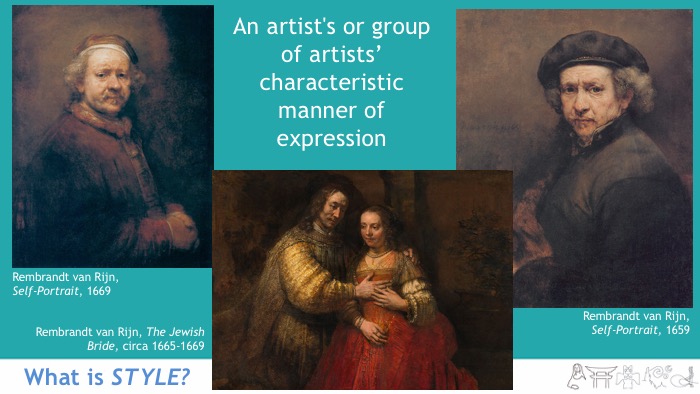
We wait at textures from Rembrandt, how he applied the paint thickly, his employ of golds, ruby, and browns, the simple nighttime backgrounds, the raw emotion. After a few minutes of study, I switch the slide and show one Rembrandt that they oasis't seen alongside 3 other Northern Baroque flow artists. I ask, which one is Rembrandt?
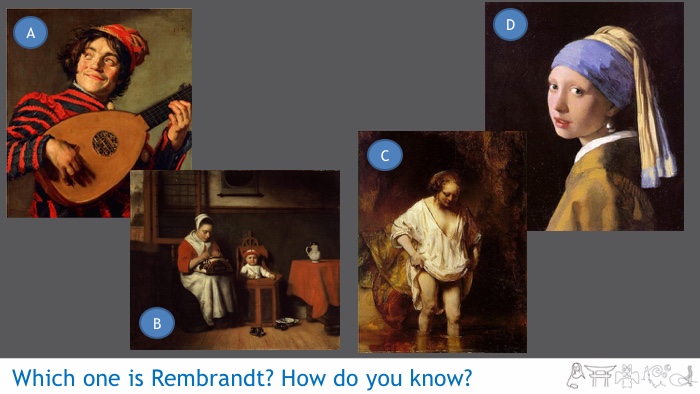
Each of the other artworks on the slide are from the same time period as Rembrandt and then they take commonalities like the dark backgrounds, lit figures, similar color palette, genre scenes, etc. Only one has the rich painterliness of Rembrandt. That is his way.
For a free re-create of my lesson for this activity, click the button below.
Free PowerPoint!
How to Teach Style – Free PowerPoint Lesson
Teach students to "read" an artwork and understand the nuts of style with this interactive lesson.
This mail was originally published on Jan two, 2017.
Source: https://artclasscurator.com/style/
0 Response to "What Kind of Ways Are There to Teach Art Styles"
Postar um comentário